10/25/2006

Blast From The Past; Snowpony


SNOWPONY INTERVIEW


On one of the last days I was in London, it rained, and I got to meet Katharine Gifford, the leader of Snowpony. We met at a cafe on Curtain Road, in Shoreditch. It was actually one of the first places I had been to in London, and it was like returning to the womb. Snowpony came out with their first record a few years ago. They did a few tours of America, and played around England and Europe, but lately they have been laying low. It was interesting to find out what was up with them, as we all wait for the next release. Hopefully this summer we will see them in some festivals. Katharine could then take some time off watching Australian survivalist shows and doing Brazilian jiu-jitsu.


AL: So how's the new record going?
KG: We did three tracks and they turned out pretty well. We sent them to our label, Radioactive, and it turns out that they are having financial problems. There's been a big shakeup between them and MCA, and they haven't got back to us. We waiting for them. I guess that they are streamlining the business. If you don't have a current record out it's difficult to get gigs.
AL: What are you doing in the meantime?
KG: We're still rehearsing a lot. We have a new member. She plays guitar and keyboards. Me and her are doing a side project. We'd like to start our own label, but we're tied to this contract, and we'd like to get that sorted out. Debbie Googe is doing a computer course. Her mission at the moment is learn how to design websites so we can do our own website. We're trying to use the time productively.
AL: What will the second record be like then?
KG: All the songs are written. It will be more polished sounding than the first one. The first one was sort of murky sounding. In places in was murky and had an interesting ambiance. The new stuff is more like Northern Soul songs. There's three sorts of songs that we do. We do quite fast in your face rocky songs, then slow melancholy songs, and then totally stupid songs. So we have those three categories. Punk and Northern Soul have a lot in common. There both sort of short songs, but our songs are becoming more extreme. Once we get the go ahead, we're ready to record. We finished the three songs for a single.
AL: You write all the songs. Do you have a studio at home?
KG: I have one of the first portable four-tracks ever made. It's good actually. I have a bunch of old gear. It's not flash; it's quite basic. Everything is out of date because it's cheaper that way. I wish that I get a Therimin. I have a Watkin's copycat. I have to patch in every sound through. I have an old Farfisa that doesn't work very well. It's one with the speaker built into the keyboard.
AL: The song "Easy Way Down" your referred to Dalston. We're not too far from Dalston now. What do you like about Dalston?
KG: There's a Gene Pitney song "24 Hours From Tulsa." When I heard that, I thought he was saying "24 hours from Dalston" so I thought I would put that in the song. I have another song about Dalston too. You've been there, haven't you? I tell people that I live in Dalston. And they say "Oh, no. Sorry to hear that." Sort of a taboo area to live in. Now it's slowly being colonized by the bohemians.
AL: How did you like the tours in America?
KG: Last time we were in the States, we toured with Hooverphonic. They're a good band actually. One of the members left after the tour, so I don't know what they're like now. We toured the South with them, places like Texas, Florida, and Atlanta. We had never been to that part of the States. I like it a lot. Once when we played a show with Henry Rollins, before he went on, he was get all pumped up, and all these veins are popping out of his neck. So that's what I do before I go on. Being on tour is like one of those social experiments where they put people on a secluded island in Scotland and see how long they can survive.
AL: Is Ian still in the band?
KG: My little cousin joined us for a while because Ian went mad on tour. He went mad in Atlanta, and we almost left him there because he was really annoying. He's a little bit too rock and roll without actually putting any real effort into things. After Ian got a sick note, my little cousin started to sing with us. He was really great. He has a choirboy's voice because he's only twenty-one. He's not a permanent member of the band because he's still doing his degree. His mother won't let him join full-time. There's family pressure. I don't want to be responsible for destroying his future career. He played Glastonbury with us. That was more or less his first gig.
AL: You have been using samplers and programming sounds, and using sequencers. What sound are you after eventually?
KG: I like the idea of fictional sounds that have never been heard before. You can use that stuff as a starting sound and sculpt it as you go along. I like a bit of noise definitely. It's all about finding a balance between melody and noise. If it's too melodic, it becomes syrupy. You need a certain vibration.
AL: Do you have any advice to young girls who want to start a band?
KG: Be very careful if you sign a deal with a record label. Make sure that you have a real good lawyer. You have to make this choice whether you want to tour and have your record promoted, then the record label has you by the balls. If you want more freedom, it's going to be difficult. Stereolab were really smart because they had their own label and all the control.


10/18/2006

The Black Angels @ Troubadour OCT 17th

Photobucket - Video and Image Hosting

Photobucket - Video and Image Hosting

Photobucket - Video and Image Hosting

Photobucket - Video and Image Hosting

Photobucket - Video and Image Hosting


Photobucket - Video and Image Hosting

Photobucket - Video and Image Hosting

The Quarter After


All photos by Alexander Laurence

Spencer Tunick Interview


I met the artist Spencer Tunick recently at his home in Greenwich Village. He showed me the many nudes he has been photographing over the past ten years. He combines conceptual elements with urban settings. His photographs are a document of a live performance. Most of his work has not been seen, except in magazines. Now with much of his nude series near completion, we will be seeing the work in a setting the way it was meant to be shown. Spencer's work is usually done in the morning. He finds an interesting setting or juxtaposition, and takes a picture of a nude person or group of nude people. The work is done quickly with early morning risers looking on with approval or disapproval. Spencer has been arrested a few times for creating indecency, but his work is not pornography, but visual constructs. He has photographed many famous New York people, and hundreds of anonymous people who have collaborated in this strange world of Spencer Tunick. His work is fun, exciting, and yet sometimes political.

I always think of your work like I do think of Joseph Beuys' or Yves Klein's work. The photography is a documentation of the real art, which was the public performance that happened already, with all these nude people, or one nude person in an urban situation.
Spencer Tunick: There is a solid piece that comes from it, the event that is a performance. I turn everyday people, for one morning of their lives, into performance artists. Then, they return to their lives, for the rest of the day. So it's quasi-documentary, quasi-performance, quasi-conceptual. It's in-between everything, so that's why I don't really consider myself a straight photographer.

Do you use a lot of heavy equipment or expensive cameras or plates?
ST: I'd love to have the money and a truck to do all that. You need a truck to haul around an 8 x 10 camera. It would be a very slow process, and I have to get this done before the police show up. Some of my shoots take place in the street, so safety is my number one concern. To set up a big camera would be insane, so I just use a medium format, with one camera and one lens, since 1990. It's not about technology. Sometimes I'm so nervous, that I don't hold the camera strong enough or I drop out of focus. With my "Naked States Tour" I incorporated the idea of a traveling artist. I set out to document a situation or an experience. I was influenced by Robert Frank's book The Americans, where he went around to 48 states and photograph people there. I liked Edward Ruscha's series of gas stations.

How many people have you photographed nude over the years?
ST: Probably over two thousand. To do my art, you have to be able to work with the masses. It's hard. The only connection you have with the masses is if you're in government or in music. Those have been great organizers. I thought to myself, the only way to create large shoots on the road was to go to festivals and ask them whether or not I could create my work within the context of those festivals. I went to this Phish concert in Maine. I went to Sturges. I couldn't find anyone. I went to Burning Man in the Nevada Desert and got 160 people to pose. I could have had over 500 people but I didn't wait. The internet was our main form of organizing the shoots. I posted my journal on my site and contacted many people over the internet. I sent snapshots to a person who kept the website up, and people who were interested could follow our journey on the road. I want to launch a book on the web. I think that is an interesting way of showing work.

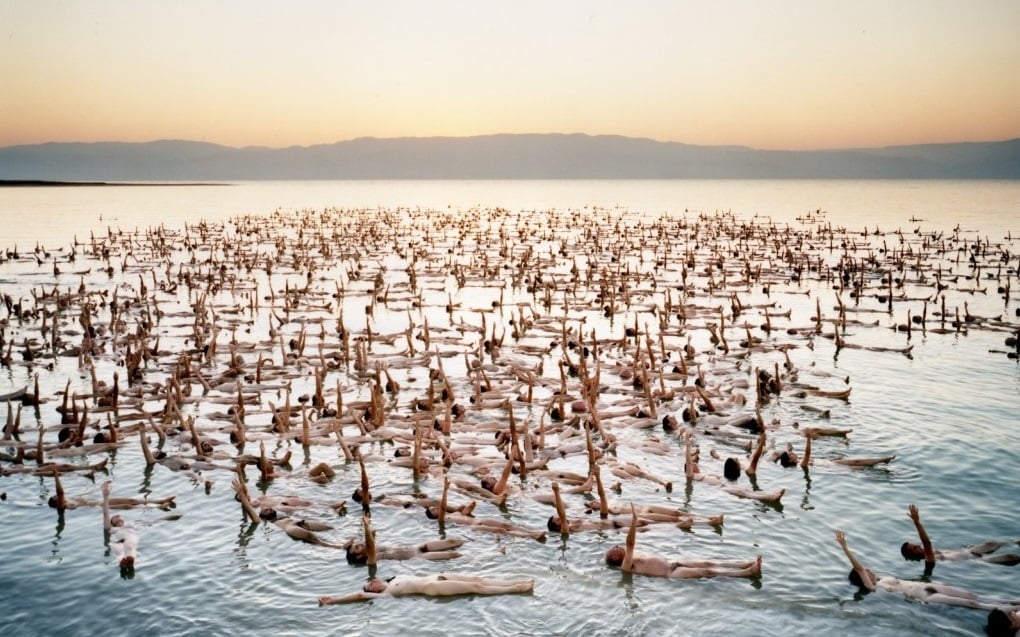
Spencer Tunick, Dead Sea 4 (2011). Courtesy 4 Florentin.

Spencer Tunick, Dead Sea 4 (2011).


Did you have any problems with the police? Did they stop you or take away your cameras?
ST: In Indiana we were stopped by the Indiana State Police. They said that they were going to confiscate my van, my photo equipment. Both the models and myself were nervous. There was three police cars. One of the officers saw us in the middle of a shoot. I didn't know how I was going to get out of it this time. In New York, I can call my lawyers. William Kunstler helped me on my first case. CNN had done a piece on one of my arrests before. Just off the top of my head I asked them "If they watched CNN and do they remember a photographer getting arrested trying to photograph a male nude on top of the crystal ball at Rockerfeller Center?" Four out of the six officers had seen it. That softened them up a little. They started to listen to me. I told them that "I am an artist. I'm not a pornographer. I'm out of state. I'm here to do this one picture." I showed them my pictures and they started to get into it, and everything started to change around. That was my one dealing with the police on this tour.

What do you think of some of these photographers who have been getting a lot of attention recently like Charles Gatewood, Eric Kroll, and Richard Kern?
ST: Gatewood mostly documents stuff. I like Eric Kroll's early work. His black and white photographs of his wife. They weren't as aggressive. There was no bondage. As far as Richard goes: I like his work and he likes my work. We trade prints. But I don't trade for his bondage prints. I like his softer stuff and he likes anything I do. Again I'm not a big fan of photography. I like pockets of an artist's work. There's not so many artists who are working with nudes these days where you like everything that they do. I do like Sally Mann. I hope that she continues to photograph her children as they grow older. I like things that are conceptual. I don't like pure documentation although I like Larry Clark's work. It's voyeuristic yet real. I also like Chris Burden and Nancy Rubins.

Is music or films an influence?
ST: On this tour we listened to Pavement, Radiohead, and Dylan. When we got to California we listened to Crosby, Stills & Nash. The Spinanes and Cibo Matto. AS far as films, I'm into Ray Harryhausen. Special effects. Japanese creature films. I'm very fantasy oriented.

What was this picture about?
ST: This one is about chemical warfare. It's on my poster. I was interested in violence, not domestic violence, but violence in the United States. To create an explosion beforehand, it soothes me and prepares me. On my shoots I do two set-ups. One is more abstract, and then I do one that is just chaos. Those shoots are like therapy because I can then deal with my fear of terrorism and loss of life.

Your prints are very large. Many people miss out on that when they see them only in magazines
ST: The great thing about having a show, is that you can exhibit it in the way that the artist meant you to see it. When you see it in a magazine, you don't realize what the scale is of the photographs. The best people to work with are people who have a sense of art as it hangs in a gallery or museum. They know that they're not going to see their picture in a pornographic context. A lot of people on the Naked States tour, had never seen art before. They had only seen Playboy Magazine. Sometimes I had to discuss my work for an hour, and talk about figurative nudes.

Are you are very tactile person?
ST: Uh. (pause) I like to work with my hands. Sometimes I have breakfast with the models afterwards. If they want to give me a massage on my shoulders, that's fine. I'm very professional. I meet a lot of people and am very open-minded.

www.spencertunick.com


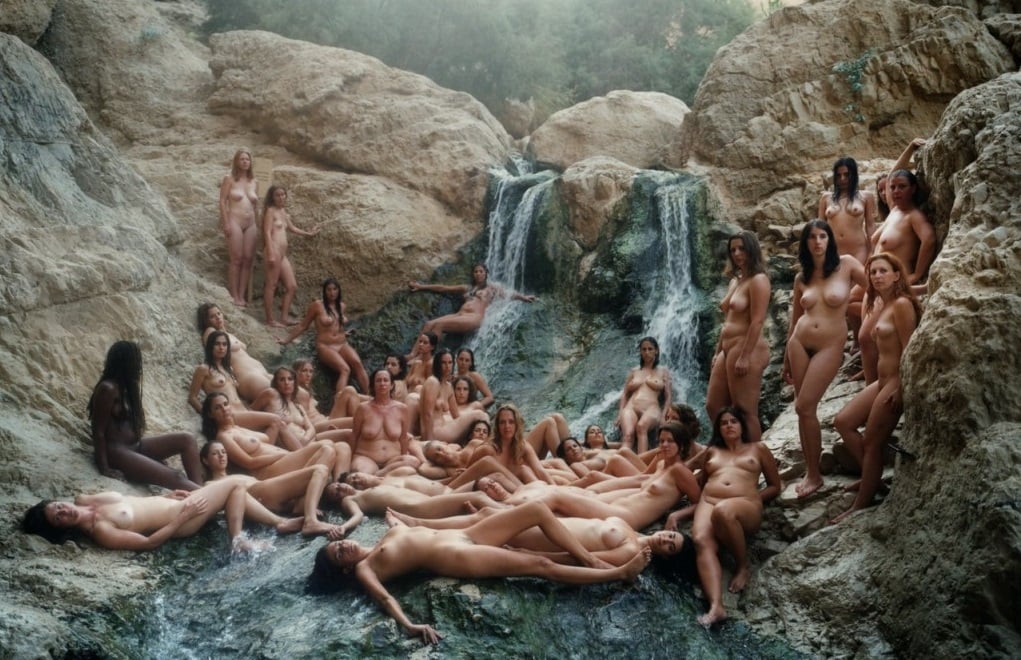
Spencer Tunick, Dead Sea 15 (2011). Courtesy 4 Florentin.

Spencer Tunick, Dead Sea 15 (2011).


10/15/2006

Blast From The Past: Nina Gordon


I caught her in New York City before she went on the Conan O'Brien show. Nina Gordon seemed excited about her new solo career. She also talked about doing some stuff for VH1. Her new album is called Tonight and The Rest of My Life. It's great and you've probably heard some songs already or saw the video. Nina is from Chicago. She is blonde and thin. She wears fashionable clothes. This is her first solo album. She used to be in Veruca Salt. She wrote all their cool songs. She will be on tour in your neighborhood this fall. Her songs like "Now I Can Die" and "Hold On To Me" are bound to be classics. I remember a time when if you had a Pixies record you were cool. Now that the Indie world is dead. I am glad that the real songwriters are shining right now. I am tired of being told what to listen to. It's okay to have talent ...
AL: Are you going to do a Behind The Music for VH1?
NG: I don't think that I have gotten to that point where I am worthy of a Behind The Music. But someday. We can only hope.
AL: I saw you on the Tonight Show. You said you were a big Scott Baio fan? Was it weird finally to meet him?
NG: Did you watch it? When I was little, I have a huge crush on Scott Baio. I sent my picture of myself to me, care of Teen Beat Magazine. Of course, I never heard back. The Tonight Show found out about this. They found the picture of me on the internet. They decided to unite me with my childhood crush on the show. I talked to him briefly.
AL: Is Veruca Salt still going on? They replaced you?
NG: I guess so. I'm irreplaceable. One person from the band continued on as Veruca Salt but with a totally different lineup.
AL: Have you heard their new record?
NG: Yeah I have. I think that it's pretty good. I don't think that it's a Veruca Salt record. I don't know why she continues to call herself that, but I have no problem with that.
AL: When you were writing songs for the new record, how was it different than it was when you were in Veruca Salt?
NG: It was very different because I wasn't writing my songs for anybody. I was just writing my songs on my own and for myself. There was no editing process in terms of "What will these other people in the band like?" It was more about are these songs meaningful to me, and if so, then I want to record them. So it was freer, more open, and limitless.
AL: There are all these references to finality and the end in a few of the songs?
NG: I don't know. I think the album does deal with endings but also new beginnings. It's more of a forward-looking, open-ended future feeling for me. Certain chapters are closed but a new chapter begins.
AL: Are you going to tour soon, and will some of the people who played on the album be in your band?
NG: I'm going on tour in October and through Christmas. Some of the people who played on the album will be with me. Then there are some other people. Hopefully the band will be permanent. I hope that we will all be happy touring together and it will all work out. I would be nice to have a group of people who I can play with for a long time.
AL: Are there any interesting books that you have read?
NG: Actually, the last book that I was inspired by was The Good Apprentice by Iris Murdoch. It's one of my favorite books. It's about learning to be good. How to be good and what a pointless occupation that is.
AL: Do you have any advice for young girls who want to start their own bands?
NG: The only advice I can give is keeping doing it, and keep playing for as many people. Hopefully many people will listen to you, and the right person will listen, and you can move on from there. The whole point is not to shut up and keep bugging people with your music.
AL: You have a few songs about relationships. Do you think it's good to wear your heart on your sleeve, and deal with emotions in a public way?
NG: I don't really know how else to write songs. If I could write songs about other people I would. But somehow it doesn't work out for me. So I write songs about my own feelings, and therefore much of it is autobiographical.
AL: Was this the first time you worked with Bob Rock?
NG: This is the second time. It was great. He and I just connect musically and have a good time. I wanted to work with him again. We had done the last Veruca Salt record together, and once I had a bunch of songs together, I sent them to him. He just loved them and wanted to start working right away and we did.
AL: Are there any records that you liked recently?
NG: I really loved the Macy Gray record. I like the new Travis record. I like Aimee Mann. There's at least three records a year that I like.
****** Check out her website and sign up: www.ninagordon.com

10/10/2006

Venini: Debbie Lime


Venini began in late 1998. The very tall and ominous Debbie Lime was in a few metal bands years back when. She met up with Russell Senior, a high priest of the band Pulp, Nick, Ash, and Bob the drummer are also in the band. I have been trying to write to them for ages after I heard their singles "Mon Camion" and "Carnival Star" and knew that this was something as exciting as when I first heard Serge Gainsbourg or even Stereo Total. When I was in London this past February, I called Debbie a few times on the cell phone. The last desperate call I made, she finally answered. She had been in London all weekend and was leaving on the train to Sheffield that afternoon. So we planned to meet in Euston Station in an hour. The place we mentioned as a meeting place, Knickerbox, wasn't there anymore. So I was looking around for a tall women. Finally we saw each other and gave each other "Is that you?" look. Luckily there was a bar or two nearby to talk about this band Venini. Many people in America are dying to know more and I was only glad to bring home the news. We got a few Carlings, and Debbie broke open a new pack of Silk Cut. I showed her my Benson & Hedges. She told that was too heavy for her. All I can say is that Venini is a very glamorous band, and people who want excitement in their life should tune in.
******
AL: Can you talk about the formation of Venini. People must compare you to Pulp because of Russell Senior?
DL: The single "Carnival Star" probably sounds more like Pulp than the rest of our stuff. We have two singles that we've deliberately kept back, which are the two best singles. Russell's a good producer but he's the first bloke admit that he isn't brilliant. So we want a proper pop producer for the next two singles: "Roxy" and "Photograph." The other two singles were in the Top 20 on the indie charts. But we don't want to be an indie band. We want to be a pop band. It's crossing over that we're having difficulty with at the moment.
AL: You did the first two singles on your own label, Bikini.
DL: We are looking to get signed to a proper label. We want to get more funding behind us so that we can actually do the songs the best that we want to really, a good producer and a good studio. We recorded "Carnival Star" in the same studio that The Divine Comedy did their album, Derry Studios.
AL: So Venini has played twenty or thirty live shows together?
DL: About twenty shows. We played with Sparks. I didn't realize that they were American. I thought they were German or English. They look like someone's English grandfather. They're really weird though.
AL: In England as in America, there are too many good and really awful bands around, but there's not really one thing that defines all of them. You could be in your little world and be ignorant of most of what's going on.
NH: That's the problem at the moment with the music industry, especially in this country, it's really divided. You have Stereophonics and Travis, which I detest; I think that they're the worst band ever, the dregs of Britpop; and then you got things like Steps and Britney Spears, and I prefer Britney Spears over that other stuff. Her songs are so throwaway but they're much more enjoyable to listen to. I like TLC and 5ive.
AL: Were you in any bands before Venini or what did you do?
DL: I trained as an actress. I was in two bands in Birmingham. I'm an extrovert. I think that a lot of bands now don't want to entertain people and it's too introspective and introverted. People pay money to see something entertaining. I hate the preconception of if you have an image you can't have good music as well. I like other bands as well like The Divine Comedy, Moloko, The All Seeing I, Pet Shop Boys.
AL: I hear that Jarvis Cocker is a fan of Venini. Does he show up in disguise? Is he standing offstage at every gig checking out the competition?
DL: No, he's only been to one gig. I don't think he's worried about us. I've met Jarvis a few times and he's really nice. We've never talked about Venini. I don't know what he thinks about us. Pulp's best time was His 'n' Hers I think. I don't they could do any better than that. I do like Pulp. But it does annoy me when people like a band and they become popular and then they don't like them anymore. When Pulp did "Mis-Shapes" which is about queer people who are into weird things. Then you go on the dancefloor with all these "townies" with shirts and mustaches who are singing all the words to a Pulp song. It's time to move on.
AL: I think that more bands like Suede or The Divine Comedy should grow a mustache or a beard. I didn't know that there was such a prejudice against facial hair.
DL: I'll get Russell to grow a beard. Actually this bloke who guests with us who plays saxophone, he's got a really big beard like Father Christmas.
AL: What about these photos of the band?
DL: The press shots were supposed to be the entire band. But the photographer who did them made the other guys blurred in the background. I guess that we are playing on the height. Me being six foot tall. I'm probably taller than the whole band put together.
AL: How did you meet these people?
DL: Russell I know from Pulp. Nick I know because he used to promote clubs around Sheffield. I used to visit around there a lot. Bob the drummer knew Nick. It's a bit incestuous. Everybody knew each other. Russell had just produced the Baby Birkin record, and he didn't want to be in a band for a while. Now we've been together for almost two years. In the early stages, I remember, Bob the drummer had just joined and we had two weeks to get ready for a support gig with Rialto. It was very undercover and nobody knew about Venini back then.
AL: Rialto is good. What do you think of Gay Dad?
DL: I like them. They are the start of what music should be. I don't think that they're the best band in the world, but elements of what they got, bands should make more of it, and Venini does that. I'm not saying that Gay Dad are crap, but we take what they're doing further. They're quite glamorous and the singer is quite lively and inspirational. We want to inspire people rather than going on about being on the dole. I don't want to hear about people being on the dole.
AL: What do you write about in your songs? "Carnival Star" is a love song.
DL: It's a love song. I tend to like men that everyone goes "Oh my god! How could you like him?" "Carnival Star" is like everyone is a freak. The other single "Mon Camion" is in French song. "Camion" means "truck, but also is the English equivalent of "tart." It's kind of about Serge Gainsbourg. He's a tart himself. He was dirty and old. It's about him basically. It's about Frenchmen and things French. I went there last New Year's Eve. You should go to Paris. It's a beautiful and amazing city.
AL: You write most of the lyrics right? You are not the flesh puppet of Russell Senior's aloof will?
DL: I write all the lyrics except for "St Tropez." I write the songs and boss them about. Keep them in order! Men have to know their place.
AL: If you are onstage, and the audience is in a frenzy, do you ever dive into the audience? And what do you do to prepare to assault the audience?
DL: No, I might mess my hair up. I take it so far but not that far. I've had some singing lessons, but now I just smoke cigarettes before a show. Russell's usually in a mood. Bob the drummer is really weird and he just sits there rocking backwards and forwards. Me and Nick pace and hit walls and shout. We don't have any of that Madonna stuff. We don't form a circle and pray and someone gives a speech.
AL: What about that review in the Melody Maker? Did you offend some reviewer who wanted to hangout backstage?
DL: That was the gig in London at Barfly. The Melody Maker slighted us. It was brilliant. "Worst band in the world." -- David Dumont. We put that quote in our next advert: "Come see Venini, worst band in the world." But the music press in this country. We are really liked by magazines like The Face, ID and Sleazenation. NME and Melody Maker absolutely hate us. We knew that they would. They said that we were really unoriginal. Then on the cover is Oasis, the most unoriginal band in the world.
AL: NME seems more like nitpicking and being politically loyal to certain bands, while Melody Maker is like unexamined fandom and love letters to whatever flavor of the month.
DL: The concert that Melody Maker reviewed said that people were walking out on the concert. But we have a bloody tape of the concert. People were cheering us for ten minutes to get back on. I knew that they were against us from day one because we're stylish. Any band who are ugly and don't have style on the agenda like Stereophonics get praised by them.
AL: I think the Melody Maker was upset by that lyric "Dress me up in Gucci." They want to hear stuff like Gomez I guess? What do you think of Catatonia?
DL: I used to like them but I think they got a bit rubbish now. I think she sold out and is over-styled. I used to like Tom Jones until he did that new album. It's awful. It's like bad karoake and he just shouts the whole album. Everyone likes Tom Jones now for some reason. I prefer Serge Gainsbourg.
(A homeless person asks us for a cigarette)
AL: Here you go.
DL: He looked like Frank Carson, an English comedian. I like Frank Carson.
AL: The homeless people here are very quiet and pathetic. The just hold out their hands, and look like they lost it and are going to die that day. But it may be an act. I don't know. New York City, they are more aggressive and in your face. Here they're kind of funny and harmless.
DL: In the tube? It's the English reserve.

Check out her new band Kcasino: http://www.myspace.com/kcasino


9/30/2006

And You Will Know Us By The Trail of The Dead (INTERVIEW)

...And You Will Know Us by the Trail of Dead THE INTERVIEW
by Alexander Laurence


I heard about this band in summer 2001. I was looking forward to seeing them at CMJ in September. But that plan was changed by 9/11. It was cancelled. Six months later they released their first album on Interscope. I missed them perform during most of that year although I had most of their records by this time. I found out that finally they were playing All Tomorrow's Parties in June 2003. A few weeks before that festival, that show was cancelled too. A week later I found out they were going to play the show with Mogwai anyway.

...And You Will Know Us by the Trail of Dead was formed in late 1994 by long-time friends Jason Reece and Conrad Keely (pictured). Together they found themselves in Austin, TX, where the duo played their first shows, recruiting guitarist Kevin Allen and bassist/sampler Neil Busch. The group was already legendary in indie circles for their anarchic concert sets. Jason showed me a gash on his arm from the previous night's performance. His parents were there for this night's show, so he has only a few minutes to talk with me.

They released their self-titled full-length debut on Trance Syndicate in early 1998. Following the label's collapse, the band moved on to Merge records to issue Madonna in the fall of 1999. After years of playing, they built up quite a following. That led to major label interest. Source Tags & Codes came out in 2002. In 2003, they released an EP called The Secret of Elena's Tomb. They played a few short tours in 2003, but spent most of the year writing new material. Conrad had published an article in the new Filter Magazine that month that received much attention.
I interviewed Jason Reece and Conrad Keely right before their gig in Hollywood.

********
AL: Your album, Source Tags & Codes, came out in April 2002. How many shows have you played since then?
Jason: Probably close to three hundred shows.
AL: Have things changed since the early days?
Jason: Yeah it has changed. We have noticed that younger people come out to the shows. It's not so much a college crowd but high school kids who are into us now. That's a good thing. Having an older crowd is cool to a degree, but I would rather have a bunch of kids who have never heard of Sonic Youth or Fugazi. Those are the bands were our roots lie.
AL: Do you think that younger people are interested in the band because they saw your video on MTV? They see you and think there's this weird band and there's something else besides pop music.
Jason: Yeah. The goal for us is to reach those kids more than people know a bunch of cool bands already. In New York or Los Angeles it's so readily available and cool music is easily found. In the Midwest and these smaller cities they get their Walmarts and very few choices. For us to be on MTV is a good thing because they would have to play the same old new metal bands. I would like our video go up against Staind and abolish them. It's futile. Those bands with always exist.
AL: What bands did you like when you were that younger age?
Jason: Bands like Fugazi and Bikini Kill. Um. I would watch bands like Jesus Lizard and Butthole Surfers. I liked a band called Crust. They were a really scary Butthole Surfer influenced band that would bang on all these metal objects. I used to like Crash Worship. They covered everyone with animal blood at one show. It was wild. When you are exposed to music like that is in your face, or controversial, or thought provoking, it is great. It's not like a normal punk band like Green Day. It's like taking the rock medium and ruining it and redefining rock music. With that as our diet, we became this.
AL: You have songs like "Homage" that are like hardcore punk. That reminds me of Black Flag.
Jason: Black Flag is something we would want to pay tribute to. At the same time we love anything that is beautiful and pretty and grandiose. We also like things that are visceral. It's almost like broken bones, and the bones are sticking out of the skin, and blood is everywhere. It's like watching a corpse rotting. At the same you want to watch a beautiful rose growing out of the soil.
AL: You have certain songs that have quiet parts. You are not sure what is coming next, because most of the songs are standard songs.
Jason: I guess it is that freedom that we have allowed ourselves to do things. We haven't worried about trivial things like genres. We fit in the rock and roll genre, but at the same time why not try to manipulate the rock music? Sometimes we fail at it. It's never contrived.
AL: What is the process of writing songs like in the band?
Jason: The process who be like sitting at home and write the basic structure of a song and then present it to the other three members of the band. They are obviously going to interpret it in a different way. That morphs into something different than what it was. When we get together with the producer Michael McCarthy, he would challenge us to make it just a little bit more unique. We add a lot of layers to the sound. I like the idea of when you hear something, there are always little sounds that you pick out and you don't know exactly what those sounds are. It keeps you interested in the music.
AL: You have one song that has a political rant going on in the background. I didn't hear it really till I listen to the song a few times.
Jason: Milan Kundera inspired that song. It was the idea of some form of protest. It was like being catch up in a world where you could express your freedoms. These kids were living in France in the 1960s. They would spray paint the words "Life is elsewhere." It was sort of a nihilistic book.
AL: You switch instruments often on the record?
Jason: Yeah. Some of us aren't musically trained on all these instruments. But when it comes down to playing music, it's one of those things when as long as you pick it up and as long as you feel you can make it sound good. You don't have to go to school for twenty years to play a violin. If it doesn't hurt your ears and actually compliments the music, then you put it in. I barely know how to play piano, but I have done piano and keyboard overdubs. Neil and Kevin have taken samplers and played around with sound.
AL: We are here at this gig with Mogwai now because the original All Tomorrow's Parties festival was canceled. You have played this festival before. I read that you blew Mogwai and Sonic Youth off the stage. Can you talk about that?
Jason: It was a lucky break we had. Maybe it was the right moment? That was at a special festival. It was properly planned. It was in an area where all the music was in one place. People had their own cabins. People had their own apartments. Four or five people could be in each apartment. It was like a beautiful party. It was a complete drug orgy with music to keep everyone fueled. This Los Angeles one is more problematic because it's a big city. It's seems like Coachella is a more successful idea.
(Jason has to leave. A few minutes later I am introduced to Conrad)
AL: Have you had some time off?
Conrad: We haven't really been off. We recorded and toured with the Elena's Tomb EP. We have been writing material for the next record. The bulk of it has yet to be written and done. After we finish these few dates with Mogwai we will get back and finish it. We are doing more co-writing and sharing ideas this time. That should be interesting.
AL: Will that make it different?
Conrad: I don't how that will change things. I don't know how the songs will take shape. I am using a lot more elements now.
AL: Do you write all the lyrics?
Conrad: No. Usually whoever is singing the song is the one who wrote the lyrics. I would find it hard to sing someone else's lyrics with any conviction.
AL: Some songs like "Baudelaire" and "Monsoon" sound very heroic, like they take places in the throes of battle. They are like marching songs.
Conrad: well, Led Zeppelin influences us. I just love that new DVD that they came out with. That gave me a lot of perspective on how shitty we are.
AL: Led Zeppelin was really influenced by Blues. Your bands seems like you are more into punk and avant-garde noise?
Conrad: It's true. I think that we have a lot influences from classical rock. For me, I would say that I am more into classical rock than punk rock. Punk rock was just something that happened when I was a teenager. It changed how I looked at music and things. But it certainly didn't change my life for that long. I look at the whole history of music as being influential.
AL: If people heard "Homage" or "Days of Being Wild" they would think that you were this hardcore punk band.
Conrad: Those are Jason's songs. Jason grew up with punk rock being a big influence. When we met, I was the one who turned him on for the first time to things like Rush and Pink Floyd. Music back then was more album-oriented. It wasn't so self-conscious either. It wasn't like they thought, "We have to seem tough." They could write whatever the hell they wanted to. I liked it too because it seemed smart and brainy. Some people think rock music has to be stupid and I don't agree.
AL: Do you like garage rock?
Conrad: I like the stuff that was played in the 1950s and 1960s. I don't know why people are still playing it now thirty years later. Time is going forward. Why is music going backwards?
AL: I think people go back to their record collections and try to sound like those records. They have given up on trying to sound like an original band.
Conrad: I appreciate that. I glad that people are trying to keep rock music current because it is being threatened in many ways. But at least I think, with whatever I imagine, I see music going forward, and I see things progressing. I see things that haven't been done before in rock music. I think that Mogwai are an impressive rock band. People call them "post-rock" but they are still rock.
AL: Who does all the artwork for the band?
Conrad: I do a lot of it. I did all the art on the Elena's Tomb EP.
AL: Did you study art in school?
Conrad: I did but I didn't learn anything in college. I was drawing since I was age two. Art is something that I have always done. I had an agent when I was seventeen. I was showing art at science fiction conventions. But I quit to do music. I only quit art symbolically because you can never quit a part of yourself like that. That will always be a part of who I am. A band should be an outlet for every creative expression.
AL: Have you all been writing a book?
Conrad: I have been writing a science fiction novel for a long time. If it does come out, I don't think it will come out under my name. Actually Filter Magazine just published one of my articles. It's called "Abstract Art is Shit." It is art criticism.
AL: What period of art are you talking about?
Conrad: It's about why Abstract Expressionism and Cubism replaced 19th Century Realism and Romanticism. It's about why it happened. There was a reason. It wasn't an accident. I couldn't go into it in depth. I could write a thesis about it. It had a lot to do with the wars. But I like Surrealism. Salvador Dali is amazing. I was talking more about Abstract Expressionism. Don't get me wrong. I like all art and thank god that we have it. Painting has a history of a thousand years. Abstract art is just this new movement.
AL: Have you read any good books lately?
Conrad: I like Graham Hancock's excursions into archeology. He is trying to figure out where we came from and where civilization started.
AL: Do you have any spiritual beliefs?
Conrad: I think that there is a good chance that civilization has been around for tens of thousands of years, not only six thousand years, like they say in Christianity. Many things were built and invented by people who were a lot older than the Incas and the Egyptians. Those were later civilizations. For the "Separate Ways" video, we filmed a lot of that down in Mexico at some Mayan ruins. We went to University of Texas and they the biggest Mayan department in America. There is a good book by Balthazar Gracian called The Art of Worldly Wisdom. He was a 17th century Spanish Jesuit. It's a very good book.
AL: Any other authors you like?
Conrad: I like Umberto Eco and Tolstoy.
AL: What is Austin like?
Conrad: I am getting bored of Austin. I feel the urge for going overseas. We have spent much of the past two years there and I am getting used to it. America becomes so tiring for me. I need the stimulus of something foreign. I just got back from Thailand. That was a month ago. I feel like I have to go out again.
AL: Does anyone in the band have any non-musical or non-literary hobbies?
Conrad: None of us are race car drivers or carpenters. I am collecting string instruments and I am learning to play the viola. I have started using acrylic paint. I am making a new series of paintings. I just wrote a string quartet.
AL: The string section of the song "Source Tags & Codes" is lifted from the middle of the song "How Near How Far." That is a more orchestral tendency where you lift out motifs from different sections.
Conrad: Pink Floyd and even Public Enemy influence that. I like working with motifs. Andrew Lloyd Webber did a great job of that in Jesus Christ Superstar.
AL: What do Jason and Kevin do in their spare time?
Conrad: Jason is starting a new DJ night. I bought a crossbow recently. Music and art are my life.
AL: How is this next record going to be different?
Conrad: We will work with the same producer. The main difference is that we are going to build a new studio in Austin, so most of our ideas will happen there. We are going to work on our music on our own time. We won't be looking at the clock like we have in the past. I am pretty excited about that.
AL: The record company lets you do what you want?
Conrad: Pretty much. It's not that they don't care. They just know that were are that kind of band that doesn't take suggestions. I have respect for Jimmy Iovine. I'll take his suggestions. But even he made a suggestion on the last record and we didn't do it and it still got released. He said turn up the vocals on one of the songs.
AL: What is the Secret of Elena's Tomb?
Conrad: It is the story of a wacky eccentric guy who lived in Florida. He called himself a doctor but he wasn't a real doctor. He was a radiologist. He slept with a corpse for a number of years. It was discovered that it was the corpse of Elena, who was a young woman who died of tuberculosis. He had her body and exhumed it. By the time he was done with it, or when the authorities found out, there was nothing left of the body. It was falling apart and he was sewing parts on. They didn't charge him with anything. They just took the corpse away. He just wrote his memoirs which are called "The Secret of Elena's Tomb."
AL: What is the hardest thing about being in a band?
Conrad: Writing is the hardest thing. Writing is painful. It requires that you really get in touch with something about yourself within yourself. It's very scary place to go and it can be very terrifying. It's like the closest thing you can do to knowing God. It's like staring him in the face and saying "Here is my creation." Maybe I should maybe my writing a little less personal?
AL: What about these online diaries of people who use your picture and pretend to be you? That's not you on Friendster or whatever?
Conrad: What? You're kidding? Where did you see these?
AL: I can send you the information.
Conrad: Really? It sure is not me. Oh please! That's fucked up. Not that I care. I guess that I am flattered. I have barely enough time to write my own diaries and books.
AL: Do you have any advice for people who want to be in a band?
Conrad: Be prepared for a lot of pain. If you are not suffering for your art, then it's probably not good art. Sorry guys. We never sent out any demos. Our lives show was our solicitation. That's us.
AL: Do you like any other bands?
Conrad: I like Interpol's last record. I like what The Rapture is doing. We have played with both of those bands. I have always liked Mogwai, although I haven't heard their new album. I like a lot of Classical music. I like the soundtrack to The Red Violin. I like Gypsy music. I download a lot of music.
****

9/23/2006

Blast from the past 2000: Black Box Recorder


I did this interview back during the first album in 1999. I ended up seeing them play a few times in New York City. They went on to do three albums. Now they are more focused on their solo albums. It's good to look back on one of my early interviews....


Black Box Recorder Black Box Recorder is Luke Haines, John Moore, and Sarah Nixey. They were formed in the year of Cool Britannia, the death of Diana, and the continuing old boredom. Luke Haines comes from the band The Auteurs which has done a few great albums in the past five years.
Black Box Recorder is like a cross of The Velvet Underground with Nico and Joy Division. But they have a sense of dark humor as is evident on their single "Child Psychology" where a young girl decides to give up on life because it's not worth the trouble. England Made Me is a full album about biting the hands that feeds. Only England, with its bland suburban lawns, dull repetitive newspapers, repressed teenage sexuality, obsession with interior decoration, mastery of the bile-ridden understatement, unique perspective and translation abilities with American pop culture, could have fueled this record. Only they could write a song like "It's A Wonderful Life" and make it sound like something is desperately wrong. They have been playing shows and recording a new album that should be released in 2000. Their album also features a version of Terry Jacks� "Seasons In The Sun." Discography England Made Me, 1999
******
AL: How do you feel about the idea of bohemianism?
John: I don't know if you know this but I import absinthe into the United Kingdom. That's played a large part in my life. That's the extent of my experiences with bohemianism.
Luke: I have nothing to do with that. Get a proper job.
AL: Many people in bands in England on are welfare for a few years, till the band takes off or they sign a record contact. What do you think about that?
John: Signing on the dole in England is like the real art council grant. You can sign on without difficulty if you know how to deal with bureaucracy. If you tell a few white lies, you can stay unemployed for quite a long time and
develop your useful interests.
Sarah: They're making it harder. It's not glamorous in any way.
AL: How did you meet?
Sarah: This is my first proper band. I did backing vocals for another band.
John: You were the lead singer. The other lead singer was the backing vocals really. That was quite apparent. We were helping this band that Sarah was in. Then Luke and I had this idea for a band called Black Box Recorder.
Luke and I were going to make an avant-garde noise record. But then we thought that wouldn't be avant-garde, that would be predictable. People would think we were having a mid-life crisis. We knew immediately we had to get Sarah in the band. We sent her a fax offering her fame and fortune....
AL: What did you think of that?
Sarah: I just laughed.
Luke: See you in court!
AL: Luke, you are in this band as well as The Auteurs. How do you balance the two?
Luke: I don't really. The Auteurs hardly play at all. We're lazy. I don't like anyone in The Auteurs anyway. It's just me, and a bunch of blokes, and we're fairly indifferent to one another. It's good. They're never much impetus to play together because we never want to hang out. Both bands played at Reading this summer.
AL: Black Box Recorder did a stint at The Garage in London?
Sarah: It was once a month for three months.
Luke: It was kind of like The Velvets at Max's Kansas City, except it was upstairs at The Garage.
AL: Who writes the songs?
Luke: We write them together. We just bash it out.
John: We're like builders. Writing a song is like building a wall.
AL: I noticed that this record England Made Me is an aphrodisiac. You used to have Barry White and Marvin Gaye....
Luke: Now you have Black Box Recorder. It's a record where children will be conceived. It's known as a make out record. That's great!
John: It should be promoted as a make out record because that is a popular pastime.
AL: Are you promoting safe sex?
Luke: We don't care. The more dangerous the better.
AL: So, Sarah, what is your advice to young girls about using condoms?
Sarah: Um. I never really thought about condoms. They're not very much good.
Luke: They're pretty funny when you blow them up and put them on your head.
John: You shouldn't have any need for condoms until you're married.
AL: What do you think of the idea as music using literary devices? Most of your songs have narratives and characters....
Luke: You shouldn't get too bogged down in that. The thing about Black Box Recorder is that we're fairly succinct. You only have three and half minutes to say something in a song so there's no point in wasting it, having filler lyrics. So we hone it all down. We're not idiots....
John: (sarcastic voice) We're not trying to make a short story into a song.
AL: The character that is the subject in the song "Child Psychology" and a few other songs, I don't see as being just Sarah. People like Jewel or Beth Orton just write about themselves....
Luke: It's psychobabble. That's right, it's just a characterization. We would never spill our guts, when someone else is singing. We're too old for that.
Sarah: People think I have a problem. They ask me about my bad childhood.
AL: The British version which came out late last year has a different cover: it's a black and white photo of a glam guy and a factory worker. What's that all about?
Luke: It was actually a wrestler. They were miners. One of them was the father. He's starting there displaying his wrestling championship belt in a mineshaft with his father, who looks on disapproving, thinking "What the hell has my son become?" He's dressed as a girl. We both remembered
wrestling on TV as kids because that was the big thing on Saturday afternoon. It got axed because it became too pantomime.
John: Too low quality. This guy's gimmick was being a cross-dresser. In the early 1970's in England, any hint at being gay was completely unexceptable. He was hated by the audience. He was a bad influence because he was pretending he was gay. He supposedly had this feminine side in him
while he was wrestling all these guys who were like "Brickies." He was a nasty piece of work though. Wrestling was never that serious because he would really try to hurt people. It still hurts people's careers that they can't be openly gay.
AL: One of the ideas of the movie Velvet Goldmine was it was okay to be gay as a performer as long as you are entertaining.
Luke: That was a really bizarre movie. It was made by Todd Haynes, an American, who seemed to have this idea that provincial England in the 1970s was full of marauding glam rock gangs, which is odd. Except for David Bowie, glam rock wasn't that threatening or that androgynous. It was like
bricklayers, or ugly blokes wearing cheesecloth dresses. It was something that was on Top of The Pops. Never saw a glam rock gang in my life. So sue me.
AL: What bands do you like and would like to play with?
Luke: Really none. We're really autonomous. We won't play with other bands. Other bands are not a consideration. I'm indifferent. We do our stuff. That's why I do it, because I want something to listen to. If you can do it, you can construct the perfect soundtrack to your house, instead of letting someone
else do it for you.
John: If someone good came along, we would be foolish to turn them down. I like Air.
Sarah: I like The Cardigans.
AL: So you live in Central London. In Clerkenwell?
John: No. But we are part of the Clerkenwell Cabal. We are the center of the Clerkenwell literary scene. We get drunk and they think we're funny.
Luke: Apparently. It's only us. We show up to the openings of anything.

AL: Is it a rule in the band that you have to wear a suit?
Luke: You can be cynical about suits, but they are a good thing, if you're well dressed.
John: A well-cut suit can hide a multitude of sins.

FCUKERS TEAM UP WITH TAME IMPALA ON “LOSER (FCUKERS REMIX)”

NY-DUO FCUKERS TEAM UP WITH TAME IMPALA ON “ LOSER (FCUKERS REMIX) ” RECONNECT WITH TAME IMPALA AFTER OPENING THE FIRST U.S. LEG OF THE DEAD...